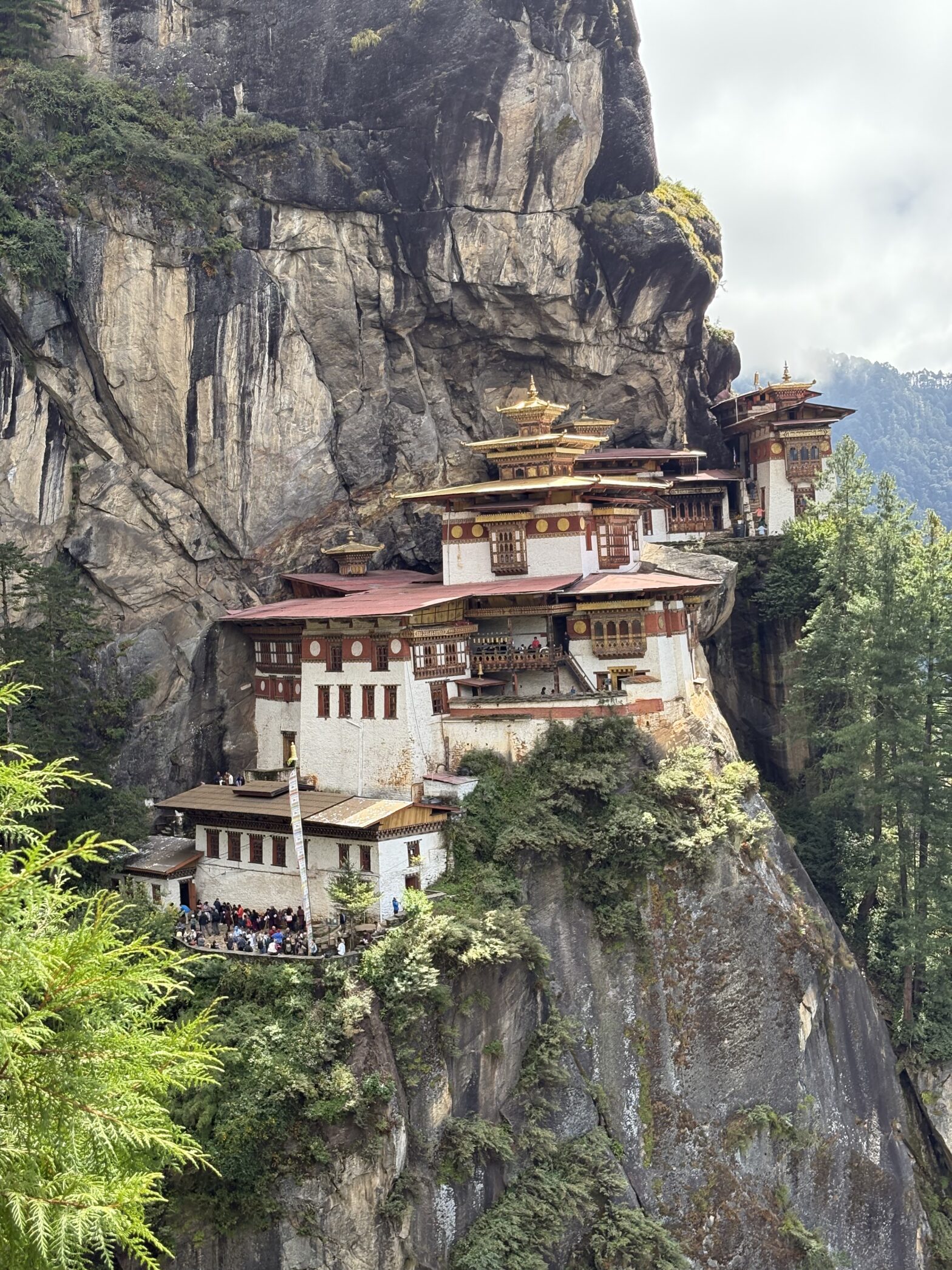
I knew what Tiger’s Nest looked like long before I saw it. Almost everyone does. It is probably the most photographed place in Bhutan, a white monastery pinned to a cliff, endlessly posted and shared. What the photographs never mention is the cold.
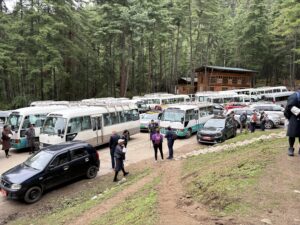
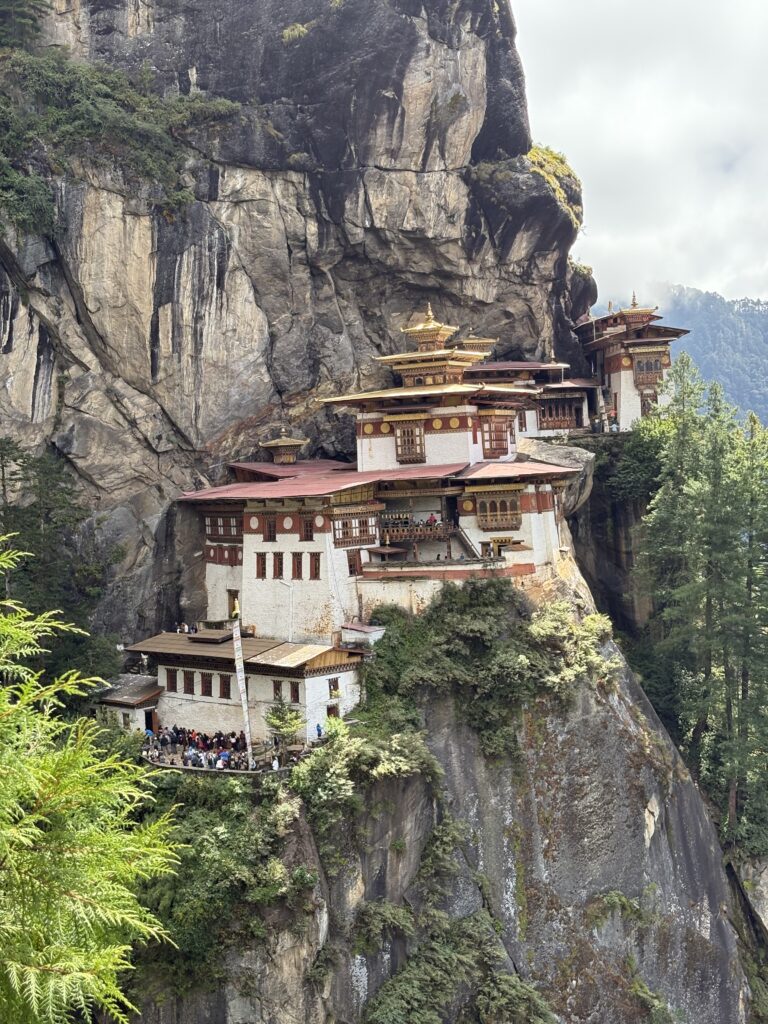
It was 8:30 in the morning and six degrees when I set out from the base of the trail. Cloud sat heavy on the mountains, mist clung low to the blue pines, and my breath fogged in front of me. Above, sheared into a granite cliff face 3,000 feet over the valley floor, sat Paro Taktsang. From the gravel car park it looked exactly like its picture, only impossibly far away: a white speck I was somehow supposed to reach on foot.
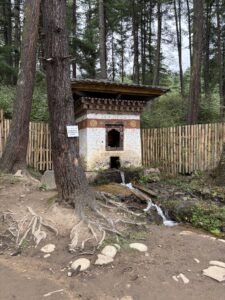
I had a guide with me, but he had made this climb so many times that it was pure routine for him. To him it was not a spectacle, just a path. He moved at his own easy rhythm and left me to mine, so for most of the day I was effectively on my own. That suited me. Alone, the climb came down to its essentials: footfalls on packed red dirt, the creak of a prayer wheel turned by a mountain stream, the flutter of prayer flags between the trees. Groups climbed around me with chatter and laughter, stopping for photographs wherever the trees parted, and ponies clattered past carrying day trippers up to the midway cafeteria. I had no one to pose for and no conversation to keep up. I could stop when I wanted and stay as long as I liked.
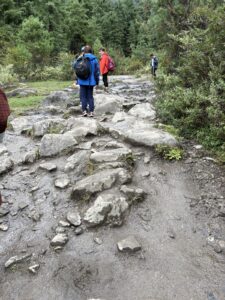
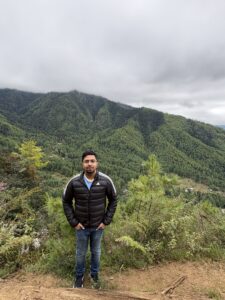
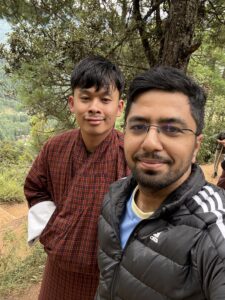
The initial ascent worked my calves quickly and, mercifully, began to take the edge off the chill. The path wound steadily upward through the forest, switchback by switchback, dusted with pine needles and loose gravel, with pale lichen trailing from the branches overhead. Before long the altitude made itself known. My heartbeat thudded in my ears, steady and insistent, the only drumbeat on an otherwise silent stretch of trail. I shortened my stride, slowed my breathing, and paused at the bends to let my pulse settle. The monastery kept vanishing behind ridges and cloud, then reappearing through breaks in the trees, each time a little larger and a little more real.
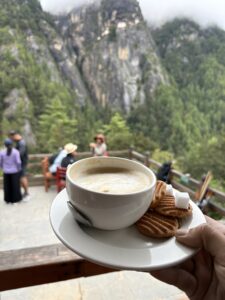
Reaching the cafeteria at the midpoint felt like a small victory. I found a seat facing the cliff and wrapped both hands around a cup of hot coffee, the first real warmth my fingers had felt all morning, with a few plain biscuits on the side.
Simple as they were, coffee and biscuits have rarely tasted so earned. It was not the kind of moment anyone frames, and it is one of the ones I remember best.
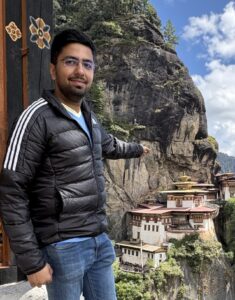
Beyond the cafeteria the trail steepened again, climbing through thinner forest until it levelled out at the viewpoint. Somewhere between eleven and noon the weather turned. The cloud lifted, the sun came through, and the monastery sat almost at eye level across the gorge, its white walls bright and its gilded roofs catching the light. This is where the famous photograph is taken, and phones came out all around me, mine included. For a few minutes the whole viewpoint was busy with display: poses, retakes, the checking of screens. It is a magnificent picture.
It is also the same picture everyone has, and the real trek began where the posing stopped.
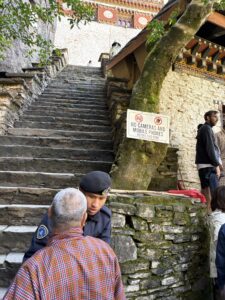
The path gave way to stone staircases. To reach the monastery I first had to go down: hundreds of steep, uneven steps cut into the rock face, leading to a waterfall that roared through a narrow chasm. A small bridge crossed at its foot, and the air there was sharp, damp, and cool with spray. Then came the final, breathless climb up the opposite side, my heartbeat loud in my ears again and my legs burning, until the gates were finally in front of me.
At the gate, the monastery asks for everything that records. My phone, camera, and bag all went into a locker at security. The most photographed place in Bhutan cannot be photographed from the inside. Whatever happened past that point, I would have nothing to show for it.
I slipped off my boots, and the cold timber and flagstone floors beneath my wool socks grounded me instantly. Inside the dimly lit shrines, the scent of burning juniper and butter lamps hung thick in the air. Murals of fierce deities glowed faintly in the flickering light, and butter offerings stood sculpted with delicate precision. I sat on the floor of a quiet chapel, feeling the draft of the abyss just inches beyond the thick wooden shutters, and the sheer improbability of the place settled into my bones. Legend says that Guru Rinpoche flew here in the eighth century on the back of a tigress to subdue local demons, then meditated in a cave on this very cliff. Sitting there, surrounded by sheer drop and centuries of devotion, the myth felt entirely reasonable. I have no picture of any of it. I have the smell of juniper and the cold of the floor instead.
The descent was a test of tired knees, not least because the steps I had come down now had to be climbed again. The trail I had walked in cold and cloud was warm and sunlit, and I passed people still on their way up and recognized the look on their faces.
Near the bottom I looked back one last time. The monastery had receded into the rock, distant and serene, looking once again exactly like its picture.
We live in a time that rewards display over depth: the summit photo over the climb, the proof over the experience. Tiger’s Nest offers plenty of display, and I took my share. But what I carried down were the things I could not post: a heartbeat in my ears, hot coffee in cold hands, the hush of a chapel on the edge of a cliff.
For one morning, depth won. 🙂